 Fitness Home Journal

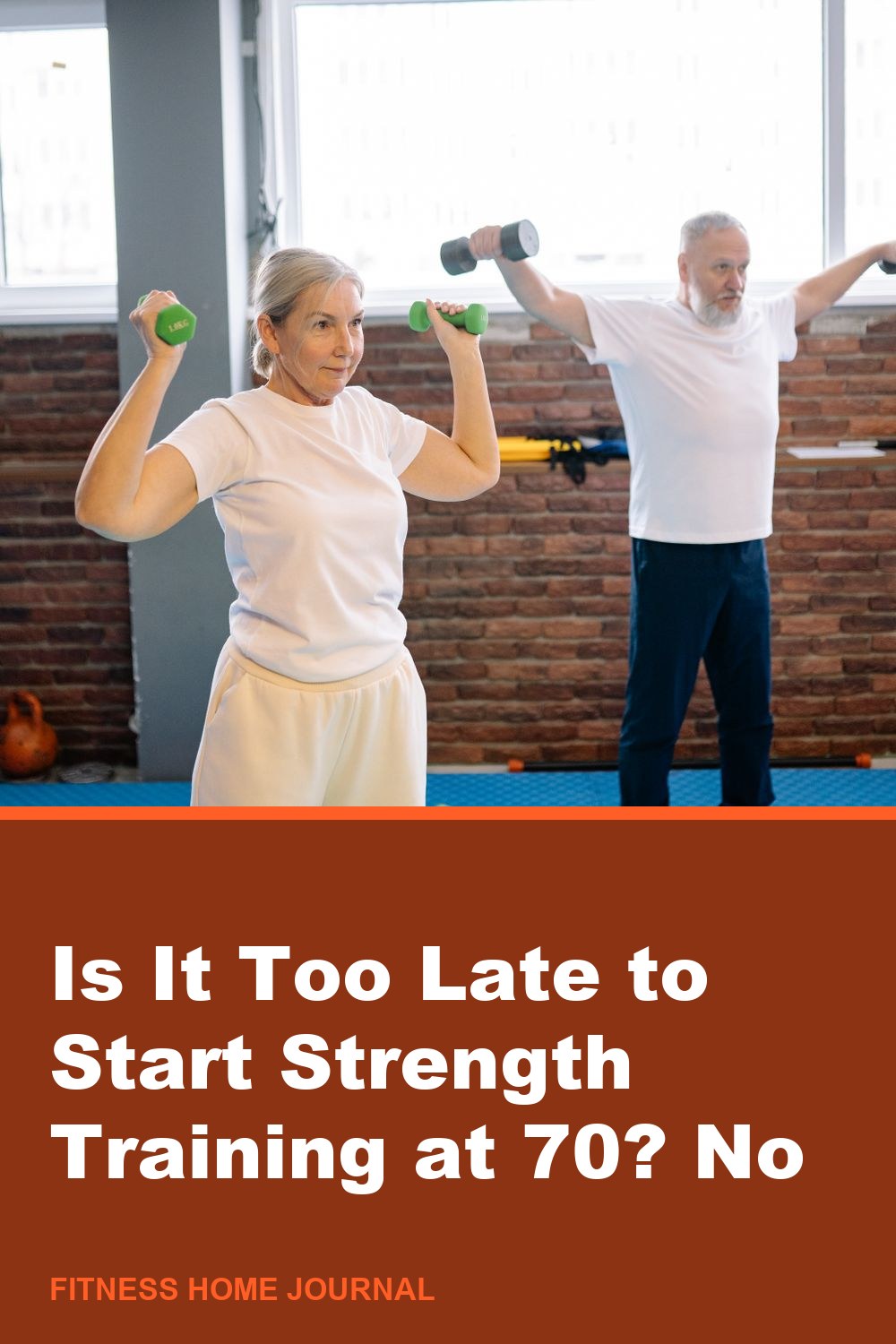

- Judy Hilton started lifting at 74 and deadlifted 132 lbs at 78, after starting with box squats, step-ups and bird dogs.
- Barrie Zucal began powerlifting at 70, won her Maryland state age group within a few years, and now trains just two days a week at 80.
- Start with two short, easy full-body sessions a week, keep effort moderate, and judge progress by everyday tasks like standing up and carrying bags.
No, 70 is not too late to start strength training. Two lifters who began in their 70s, Judy Hilton and Barrie Zucal, are still lifting at 78 and 80, and both got clearly stronger. The practical way in is gentle: a few bodyweight moves, light weights added after a few weeks, and sessions you can recover from. This matters now because both stories are getting wide coverage, and they take away the most common excuse for waiting.
The belief: "I missed my window"
Many people assume that if you haven't lifted by 60, you should stick to walking and stretching. The reasoning sounds careful, but it leaves out the thing most older adults say they want: to stand up from the floor, climb stairs and carry groceries without help. Those are strength tasks. Walking alone won't build them.
Hilton, writing in Women's Health, was a lifelong recreational mover who loved kayaking, swimming and long dog walks. She had never done structured strength training. Just before her 75th birthday she sat down on a curb outside her house and couldn't stand back up. That scare, not a fitness goal, got her into a gym.
What two late starters actually did
Hilton joined Aspire Athletic Club in Schenectady, New York, and trained once a week with the owner, Chris Wertman. Even simple movements were hard at first, so she began with bodyweight box squats, step-ups and bird dogs, and spent that time learning form.
After a few weeks she added 5- to 8-lb dumbbells. A month or two after that she noticed she could do more repetitions and lift heavier. About a year in she moved to full-body sessions twice a week, with squat variations, walking lunges, weighted glute bridges and chest flies. Then she decided she wanted to deadlift. She practised with a kettlebell, moved to a barbell, and eight months later pulled 132 lbs for a single rep at her gym's exhibition. At 78 she lifts three days a week (upper body, lower body, and a mobility and balance day) and can do three reps at 132 lbs.
Zucal's route was looser. As she told Fit&Well, she had gone to the gym for three years, then skipped it for three, before she tried a powerlifting class at 70. She did her first bench press under instruction and loved it. Within a few years she was Maryland state champion for her age group, with a deadlift best of 176 lbs. At 80 she trains about two days a week and says that is good enough for her.
What these stories show, and what they don't
They show that people can start from very little in their 70s and keep getting stronger for years. Both women trained with guidance, both progressed in small steps, and both describe real changes in daily life. Hilton can now get up off the floor easily, shovel snow, garden and play sports with her grandchildren.
They don't show how typical those results are. These are two individual accounts, not a controlled trial, and neither tells us about people with heart disease, osteoporosis, joint replacements or other conditions. Both women also had support: Hilton had trainers programming every workout, and Zucal had a trainer, a gym community and an app. If you have a health condition, a past injury or a medication that affects balance or blood pressure, talk to your doctor before you begin.
Who this applies to
- Complete beginners in their 70s or 80s: Hilton is your model. Start slower than you think you need to.
- On-and-off exercisers: Zucal's three-years-on, three-years-off history shows a patchy past doesn't disqualify you.
- Home trainers: You don't need a barbell. Hilton's first months used bodyweight and dumbbells of 5 to 8 lbs.
- Anyone with pain, dizziness or a diagnosed condition: See a doctor or physical therapist first, and get coaching on technique.
Do this instead: a first-month home plan
The numbers below are my coaching suggestion for starting out. They are not a prescription from either lifter. Train two non-consecutive days a week, about 20 to 30 minutes each, and keep a sturdy chair and a stair rail or wall within reach.
- Chair squat (box squat): sit down and stand up from a chair with control. Do 2 sets of 6 to 8 reps.
- Low step-up: use a bottom stair, with a hand on the rail. Do 2 sets of 5 to 6 reps per leg.
- Bird dog: on hands and knees, extend the opposite arm and leg, and pause for 2 seconds. Do 2 sets of 5 per side.
- Glute bridge: lie on your back, feet flat, and lift your hips. Do 2 sets of 8 reps.
- Carry: hold a bag of groceries in each hand and walk for 20 to 30 seconds, a gentle version of the farmer's carry Hilton still uses.
Rest 60 to 90 seconds between sets. Use the first two to three weeks to get the movements smooth. Then add light dumbbells of 5 to 8 lbs, as Hilton did, and increase the reps before you increase the weight. If your form stays steady after a couple of months, a structure like Hilton's current one (3 or 4 sets of 6 to 8 reps) is a reasonable target, but she trains that way with a coach.
If you want a ready-made sheet to follow, the Honest Toolkit has a printable full-body workout checklist. For more equipment-free options, our no-equipment home strength routine gives you a base to build from.
Rules Zucal and Hilton both follow
Keep the effort moderate. Zucal says you have to let go of pushing as hard as you can, which she describes as how most people get hurt. Some days you'll feel flat and some days you'll surprise yourself, and both are normal. Stop a set when your form starts to slip, not when you're exhausted.
Get coaching early. Both women recommend it. Hilton credits her trainers with teaching form and setting a pace that felt right. Zucal says to look at what's available near you, and that online videos or an app (she uses FitBod) can help if a trainer isn't affordable. Even a few sessions to check your squat and hip hinge are worth it before you load anything.
Choose what you enjoy. Zucal tried pickleball and liked it, but it didn't make her want to improve. Lifting did. Pick the type of training you'll keep doing.
Don't chase the deadlift first. Hilton took about a year and a half of training before she began deadlift practice, and she started with a kettlebell. When you're ready, read our guide to barbell deadlift form.
Support the training: food, walking and mobility
Hilton doesn't count macros, but she tries to eat protein at every meal: chicken, red meat, or a scoop of protein powder stirred into morning oatmeal. She also eats whole foods with plenty of fruit and vegetables. She walks a few miles with her dog daily and stretches at home, especially her shoulders and hips, to ease soreness and keep her range of motion. Our look at how much protein lifters really need can help you decide how far to go on that front.
Measure progress by daily life, not just weights
Both women picked goals tied to real life. Zucal's marker is whether she can lift a case of wine, and she likes being able to tell a grocery clerk, "No, thanks, I've got it." Hilton wants to carry her own groceries and get up off the floor. Pick two or three of your own:
- Stand from a chair without using your hands.
- Carry two full grocery bags from the car to the kitchen in one trip.
- Get down to the floor and back up with control.
- Climb a flight of stairs without stopping to rest.
Test them every four weeks and write down the results. Visible progress keeps you training on the days motivation is low.
Take your space
Zucal's last piece of advice is about showing up. In her gym, a group of about 12 women called themselves the Barbellas and encouraged each other to lift heavier. She noticed that beginners set the bar down gently, while more experienced lifters drop it. For her it is a sign of confidence. Her line applies to a home corner or a community gym equally: "It's your space as much as anybody else's."
As an Amazon Associate I earn from qualifying purchases: if you buy through these links I may earn a small commission, at no extra cost to you. Each link opens a search on the Amazon store for your country.
Watch or listen to this episode
Sources
- Women's Health – Fitness: ‘I Started Strength Training at 74. At 78, I Can Deadlift 132 Lbs—Here’s How.’
- Fit&Well: “It’s your space as much as anybody else’s”—an 80-year-old powerlifter shares advice on how to start lifting in your 70s and 80s
Photo: Yan Krukau / Pexels

I'm an Italian creator who builds apps, games and websites. I run Fitness Home Journal with the help of AI tools: every article starts from the sources linked above, and I check what goes out. I'm not a doctor, a lawyer or a financial adviser. Spotted a mistake or have an idea? Write to me.
Instagram @spartaco_94_My websiteWrite to meAbout this blogWritten by Ciro Irmici (Ciro Simone Irmici), with the help of AI tools. Ciro Irmici's website











 Reinventing Yourself After 40: A Guide to Embracing Change and New Beginnings





