 Fitness Home Journal

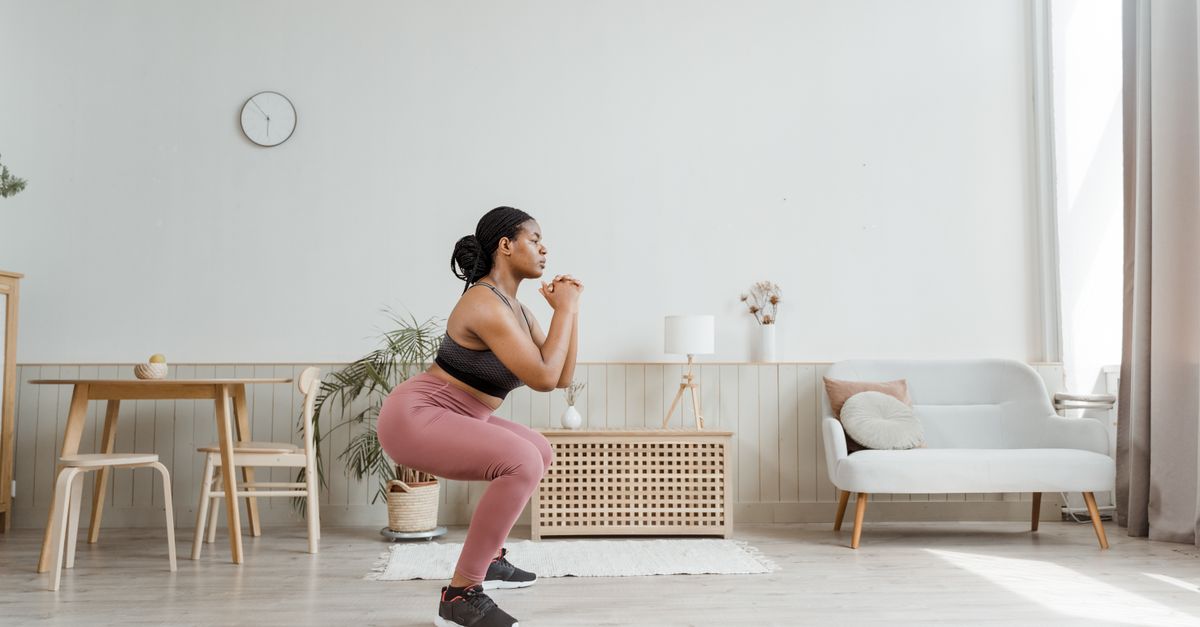
You don't need a rack of weights or an hour to start building strength at home. Fit&Well has published several short routines that use nothing but your bodyweight, a chair and a wall. One of them takes around 10 minutes and works your legs, upper body and core. For a busy adult, the useful part is how little needs to be in place: a few basic moves, done carefully, a few times a week.
Below is a simple way to combine those ideas into one routine, with a plan for progressing it and a way to squeeze it into a full day.
Why start with so few moves
Personal trainer Chris Browning, who has more than 20 years of experience writing home programmes for clients, told Fit&Well he picks beginner exercises that are simple to learn, allow natural progression and between them cover the major muscle groups. That is a good filter for any routine. If a move is easy to learn, you can focus on how it feels. If it can be made harder or easier, you can keep using it for months.
Fit&Well's other routines, written by NASM-certified trainer Jennifer Rizzuto, follow the same logic. They lean on squats, bridges, lunges, a wall push-up and a standing core move. All of these can be done in a small space.
The starter circuit
Rizzuto's 10-minute full-body routine is a circuit. You do 10 repetitions of one exercise, move straight to the next, and once you have done them all you start again. Three full rounds should take about 10 minutes if you rest briefly between moves. It is fine if it takes longer at first. The aim is to need less rest as you practise.
The three moves are:
- Chair squat: stand in front of a chair, hinge at the hips, bend your knees and lightly tap the seat with your buttocks before standing up.
- Wall push-up: hands on the wall, lower your chest towards it, then push back to the start.
- Standing knee to elbow: hands behind your head, lift one knee to 90° and bring the opposite elbow to meet it, then alternate sides.
Once those feel comfortable, you can bring in moves from Fit&Well's other two routines. These are the glute bridge, the plank and the reverse lunge. They are listed in the table below.
The moves at a glance
| Move | Dose from Fit&Well | Form focus | Easier or harder |
|---|---|---|---|
| Chair squat | 3 sets of 10 | Keep your spine from rounding and your lower back from arching | Sit fully on the chair before standing, or hold a wall for support |
| Wall push-up | 3 sets of 10 | Head, shoulders, hips, knees and feet stay in one line; hips don't drift back | Step closer to the wall to make it easier, further away to make it harder |
| Standing knee to elbow | 3 sets of 10 each side | Keep your core engaged; use the range you have | Work one side at a time with a hand on a wall or chair if balance is a concern |
| Glute bridge | 2-3 sets of 10-15, or 30 seconds in the leg circuit | Don't arch your lower back or let your knees fall inward | Can be done on a bed or couch if the floor is difficult |
| Plank | 2-3 sets of 30-60 seconds | Elbows under shoulders, core braced, glutes squeezed | Hold until it gets hard or your form slips |
| Reverse lunge | 30 seconds per round in the leg circuit | Front knee in line with the middle of your foot, chest upright | Use a chair for balance; work in a comfortable range |
How to progress without rushing
Fit&Well's advice on progression is consistent across the routines, and it is simple.
- Give yourself more rest first. In the 15-minute leg circuit, beginners start with three rounds and add rest between exercises. Over time they cut the rest and add rounds.
- Change the angle. For wall push-ups, stepping further from the wall raises the difficulty. You don't need new equipment to make a move harder.
- Add light weight later. Browning suggests a pair of fairly light dumbbells for his home programme. When the moves feel easy after a few weeks of practice, he suggests moving up in weight. This is optional, and bodyweight work is enough to begin.
- Use time instead of reps. The leg workout runs on 30-second work periods, with a one-minute rest after each full round. Doing the circuit five times takes about 15 minutes.
Fitting it into a busy day
Rizzuto suggests aiming for three to four sessions a week. She also notes you can do the 10-minute routine once a day, or a few times a day to reach daily movement goals. If you split it up, she suggests one round in the morning, one in the afternoon and one in the evening.
That flexibility matters if your schedule is unpredictable. A session that fits in the gap before a meeting is more useful than a longer one you keep postponing. Keep the chair and wall in mind too: they mean you can train in a hallway or a spare corner of the office at home.
What this means for you: a simple plan
Here is one way to use these ideas. It sticks to the numbers Fit&Well gives and doesn't add anything new.
- Weeks one and two: do the three-move circuit (chair squat, wall push-up, knee to elbow) for 10 reps each. Do three rounds and rest as much as you need. Aim for three sessions a week.
- When it feels steady: shorten your rests. Move toward four sessions a week, or split a session across the day if that suits you better.
- Add a challenge: step your feet further back from the wall, or swap the chair squat for a bodyweight squat with your feet about shoulder-width apart.
- Add variety: bring in glute bridges and a plank, holding the plank until your form starts to slip. Later, add reverse lunges.
- Optional: pick up a pair of light dumbbells when the basics feel easy.
Before each session, check a few things. Is your core engaged? Is your chest upright on squats and lunges? Are your knees tracking over your toes? If you can't answer yes, slow down or make the move easier before you add anything.
Know when to get help
Both of Rizzuto's routines point out that these exercises are beginner-appropriate but can still cause problems if done badly. She recommends working with a personal trainer to learn form and to find out when you're ready to move on. If you ever feel sharp pain, stop right away and speak with your doctor. The same goes if you have back problems or balance issues. Several of the moves have gentler options built in, such as going slowly, using a smaller range or holding onto a wall, and a professional can help you pick the right one.
FAQ
How long should a no-equipment strength workout be?
It can be short. Fit&Well describes a full-body routine that takes about 10 minutes for three rounds, and a leg-focused circuit that takes about 15 minutes for five rounds. Beginners are advised to start with fewer rounds and more rest.
How often should I do a home strength routine?
For the 10-minute full-body routine, the guidance is three to four times a week. You can do it once in a day or spread a few rounds through the morning, afternoon and evening.
How do I make bodyweight exercises harder?
Reduce your rest between exercises, add more rounds, or change the exercise. For example, stand further from the wall for push-ups. Once the basics feel easy after a few weeks, you can also add light dumbbells to some moves, as trainer Chris Browning suggests.
- A pair of light dumbbells for when bodyweight moves start to feel easy
- A non-slip exercise mat for bridges and planks on hard floors
As an Amazon Associate I earn from qualifying purchases. Links open a search on the Amazon store for your country.
Sources
- Fit&Well: The five best exercises for building strength at home as a complete beginner
- Fit&Well: Build a stronger lower body at home with this 15-minute equipment-free leg workout
- Fit&Well: I’m a personal trainer for seniors and this is the 10-minute at-home workout I give all my clients over 60 for full-body strength
Photo: MART PRODUCTION / Pexels

I'm an Italian creator who builds apps, games and websites. I run Fitness Home Journal with the help of AI tools: every article starts from the sources linked above, and I check what goes out. I'm not a doctor, a lawyer or a financial adviser. Spotted a mistake or have an idea? Write to me.
Instagram @spartaco_94_My websiteWrite to meAbout this blog










 Reinventing Yourself After 40: A Guide to Embracing Change and New Beginnings





