 Fitness Home Journal

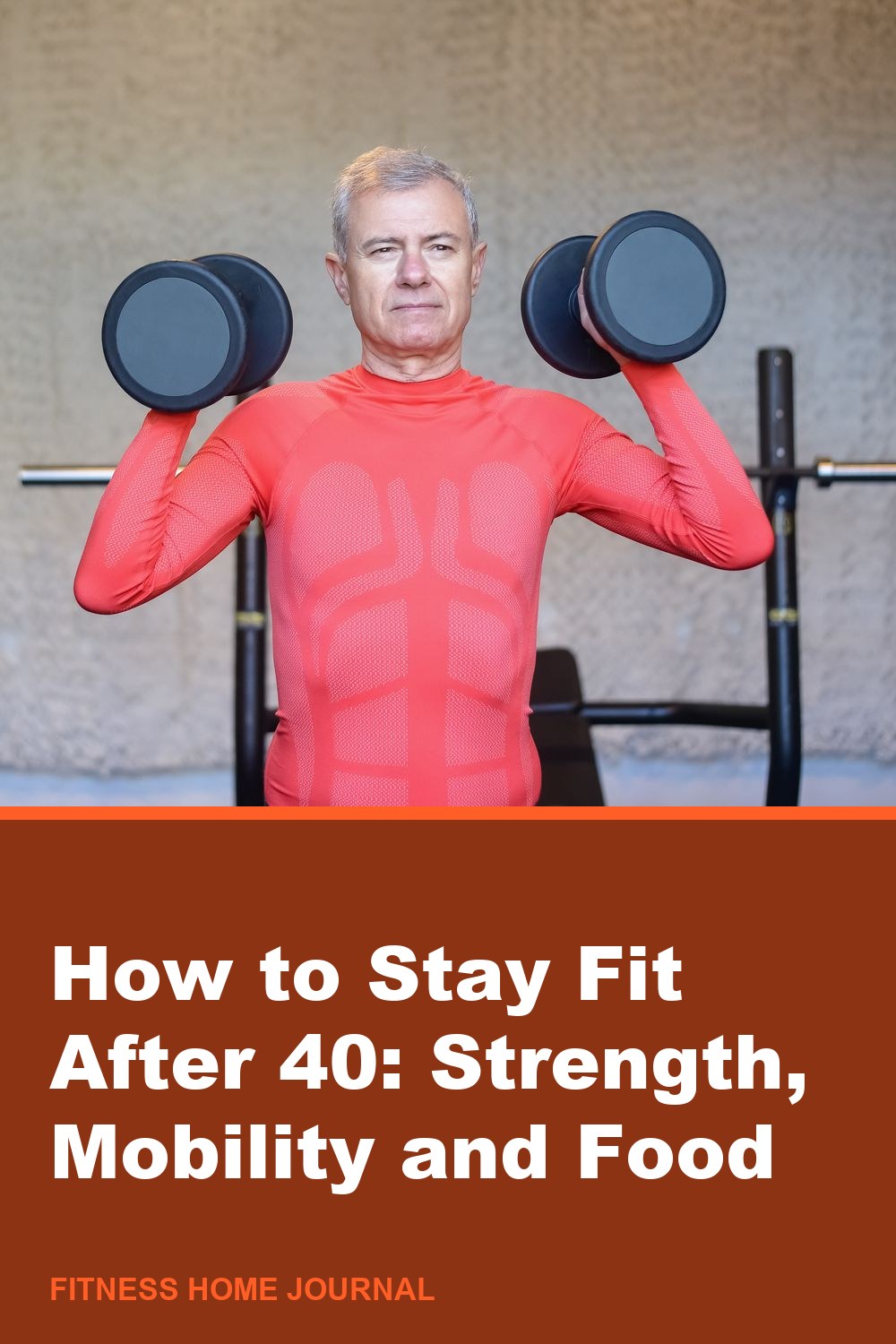

- Staying fit after 40 means adapting your training mix, not accepting decline: strength, cardio and mobility work all earn a place each week.
- Strength training preserves muscle mass, cardio supports heart health, and mobility work helps reduce injury risk, so skipping one leaves a gap.
- Start with a plan you can repeat for months: realistic goals, tracked progress, whole foods, water and a training partner beat an all-out burst.
The short answer: keep training, but train smarter and more consistently. Build your week around strength work, add cardio and mobility, eat mostly whole foods, drink enough water and track your progress. This matters now because the habits you set during and after your 40s can shape your muscle mass, bone density, overall health and mental well-being. Many age-related changes in strength and mobility are manageable with the right approach. Below, five common beliefs about fitness after 40 are checked one by one, each with what the evidence says, who it applies to, and what to do instead.
Myth: Fitness after 40 is a slow slide you can't stop
What the evidence says: Our bodies do change as we age, and those changes can affect strength and mobility. That part is true. What is not true is that nothing can be done about it. Many of these changes can be managed with the right approach to fitness and wellness.
Who it applies to: Everyone over 40, including people who have trained for years and people who have never set foot in a gym. It is not too late to start or to recommit.
Do this instead: Treat 40 as a point to adjust your routine, not to lower your expectations. Adaptability is the skill that matters: change exercises, loads and recovery as your body asks for it, and keep showing up.
Myth: Celebrity bodies prove what you should be doing
What the evidence says: Public figures such as Jennifer Aniston, Dwayne Johnson and Halle Berry are often cited as proof that fitness holds up past 40. Jason Momoa, at 46, is another example of an active lifestyle and excellent physical health. They are described as combining rigorous workout routines, balanced diets and wellness practices, and the pattern goes beyond looks: strength training, cardiovascular health, mobility and mental resilience. They also tend to stress consistent effort and dedication.
Be honest about the limit here. These are examples, not trials. They show what is possible, but they tell you nothing about how your own body will respond, and they do not come with your schedule, job or kids.
Who it applies to: Anyone looking for motivation. The lesson is the pattern, not the exact routine.
Do this instead: Borrow the principles (a mix of training types, decent food, steady effort) and build a version that fits 3 to 4 sessions in your own week.
Myth: One type of exercise is enough
What the evidence says: Each type of training does a different job. Strength training preserves muscle mass. Cardio improves heart health. Flexibility and mobility work, including yoga, supports mobility and reduces injury risk. Together they help maintain overall health, prevent injuries and support longevity.
Who it applies to: The runner who never lifts, the lifter who never does cardio, and anyone whose only movement is the walk to the car.
Do this instead: Cover all three every week. If you are short on equipment, the no-equipment home strength routine is a solid base, and the 15 essential mobility exercises give you plenty to choose from for the mobility part. Because bone density is one of the things your habits can influence, the 4-week home plan for bone density is worth a look too.
Myth: Food is just about the scale
What the evidence says: A balanced diet helps you recover and fuels your workouts. The practical advice is to focus on whole foods and proper hydration.
Who it applies to: Anyone training regularly, especially if you are squeezing sessions between work and family and cannot afford to feel flat.
Do this instead: Make whole foods your default at most meals and keep water within reach during every session. You do not need a perfect diet. You need food that supports the training you plan to repeat. If you want a number for water, the Honest Toolkit has a free water intake calculator you can use as a starting point.
Myth: If you have enough discipline, you don't need support
What the evidence says: A positive attitude toward aging and fitness can profoundly affect your progress. A growth mindset helps you bounce back from setbacks and stick with it long term. Working out with like-minded people or a fitness group can add motivation and accountability, and make the whole thing more enjoyable.
Who it applies to: Anyone who has started and stopped before. That is most of us.
Do this instead: Set realistic goals, track your progress and celebrate small wins. Pick activities you actually enjoy, and bring a friend or join a group so someone notices when you skip.
A simple weekly plan to start from
The numbers below are a coaching starting point, not a research finding. Adjust them to your level, and ask a doctor first if you have an injury or a health condition. If you are new to training, a session with a fitness professional can help you build a plan that matches your current level and goals.
- Two full-body strength sessions (30 to 40 minutes): pick one squat or lunge, one push, one pull and one hip hinge. Do 2 to 3 sets of 8 to 12 reps each, stopping a couple of reps short of failure.
- One cardio session (20 to 30 minutes): a brisk walk, a bike ride or an easy run at a pace where you could still talk.
- Mobility (5 to 10 minutes): tack it onto the end of each session, or do it on a rest day. Hips, upper back and shoulders are good places to start.
- Food and water: build meals around whole foods and drink water through the day, not only at the gym.
- Tracking: write down what you did, how many reps and how it felt. Review it every two weeks.
If you want a ready-made structure, the Honest Toolkit has a free guide to three workouts a week that fits the same idea.
How to keep it going past week three
Consistency beats intensity at this age. A routine you enjoy and can sustain will do more for you than a punishing plan you drop after a month. Keep the sessions short enough that you will do them on a bad day. When life gets in the way, shrink the session rather than skipping it. Treat small victories as proof that the routine is working, because they are.
Age is a reason to adjust your approach, not a reason to stop. Lift, move your heart, keep your joints moving, eat real food and find someone to train with. Do that steadily and you give yourself the best chance of staying strong, mobile and capable well beyond 40.
This article is informational only and is not medical advice. See a doctor about injuries or health conditions before changing your training.
As an Amazon Associate I earn from qualifying purchases: if you buy through these links I may earn a small commission, at no extra cost to you. Each link opens a search on the Amazon store for your country.
Photo: Kampus Production / Pexels

I'm an Italian creator who builds apps, games and websites. I run Fitness Home Journal with the help of AI tools: every article starts from the sources linked above, and I check what goes out. I'm not a doctor, a lawyer or a financial adviser. Spotted a mistake or have an idea? Write to me.
Instagram @spartaco_94_My websiteWrite to meAbout this blog










 Reinventing Yourself After 40: A Guide to Embracing Change and New Beginnings





