 Fitness Home Journal

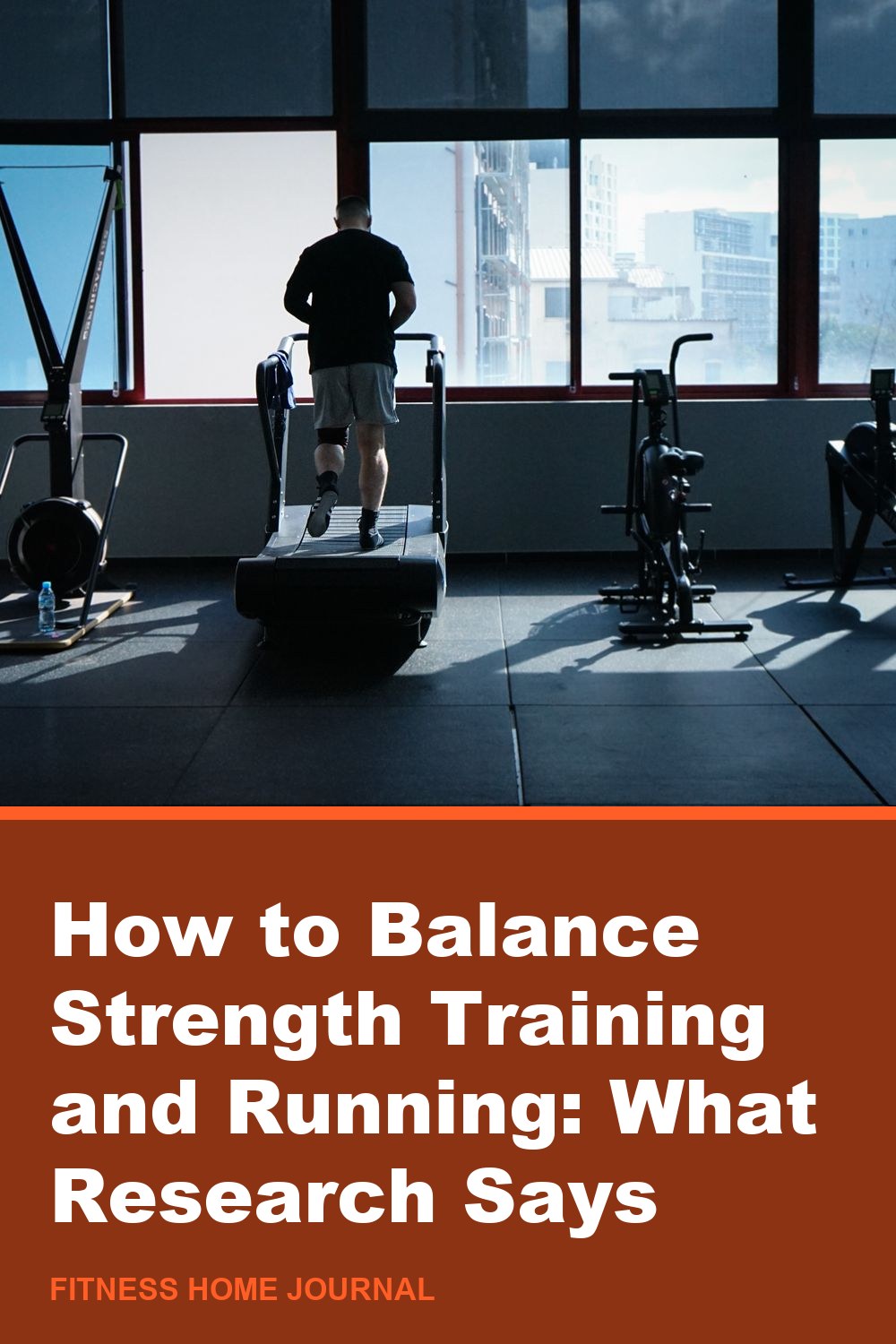

- On days you do both, run first and lift legs later; heavy leg work can blunt hard running for 24 hours or more.
- In a 15-runner test, hard lifting six hours earlier cut time to exhaustion from about five minutes to about four.
- Easy and recovery runs were unaffected, so you can pair them with lifting on the same day if the sessions sit six hours apart.
The best way to balance strength training and running is to put your hard run before your lifting, keep any run that follows lifting easy, and give yourself a full day or more between heavy leg work and your next hard effort. Runner's World recently laid out this approach, based on research by sports scientist Kenji Doma. If you squeeze training around a job and a family, it shows you how to keep both habits without one wrecking the other.
Why Heavy Lifting Still Earns a Place in Your Week
Runner's World points out that lifting builds stronger muscles while running builds aerobic capacity, so doing both improves your fitness in more than one way. Several studies link programs that combine endurance and strength work with better running economy, VO2 max and anaerobic threshold.
Doma, of James Cook University in Australia, explains the speed benefit this way: strength training lowers the energy cost of holding a given pace. Runner's World adds that lifting changes how your brain recruits muscle, calling on the most fatigue-resistant fibers so you spend less energy.
The catch is recovery. Runner's World cites a review of 132 studies finding that resistance training takes a day or two longer to recover from than a high-intensity run. That is why a leg day can leave you flat for the next run, and why timing matters more than choosing one over the other.
The Treadmill Test: 15 Runners, Three Lifting Sessions
Doma's 2014 study in the European Journal of Sports Science involved 15 runners with a wide range of ability and weekly mileage. Each did three different strength sessions on separate occasions: a high-intensity total-body workout, a high-intensity legs-only workout, and a low-intensity total-body workout.
Six hours after each session, they ran a treadmill test. First came 10 minutes at 70 percent of ventilatory threshold pace, which is easy. Then 10 minutes at 90 percent, roughly half-marathon effort. Finally, they ran as long as they could at 110 percent of threshold pace. They also did the same test fresh at the start, to set a baseline.
Six Hours Later: Close to a Minute Lost
In the fresh baseline test, the runners lasted close to five minutes at the hardest pace. After each high-intensity strength session, they lasted almost a minute less. The hard lifting, six hours earlier, noticeably reduced their ability to sustain fast running.
Easier running told a different story. According to Doma, performance at lower intensities was not affected by the weight sessions. His practical reading is that you can lift and run on the same day, six hours apart, as long as the run is submaximal. An easy long run or a recovery run fits that description.
The effect also lingered. Doma says maximal-effort running is still impaired 24 hours after lower-body resistance training, so trained and moderately trained runners may need more than one day before a high-intensity session.
Why Run First and Lift Second
Doma reports that lower-body lifting done about six hours before moderate or high-intensity running carried fatigue into the next day more than the reverse order did. So if you do both on the same day, run first. His example is a run before work and leg training in the evening.
Runner's World draws the sensible conclusion that the morning run can be one of your harder sessions of the week. That works well for busy people anyway, since the evening lift can be shorter and slower paced.
What the Muscle Research Adds, and Where It Stops
Doma also co-authored a 2022 systematic review and meta-analysis in Sports Medicine on combining aerobic and strength training. It found that combining them does not hinder strength or muscle-building gains. It can, however, compromise explosive strength gains when both are done in the same session. If power is a goal, such as jumping or sprinting, that is a reason to separate the two where you can.
Now the honest limits. The timing study had 15 runners, which is a small group. It measured one thing, time to exhaustion on a treadmill test at a hard pace, and tested it at one gap, six hours after lifting. It cannot tell you how your race times will change over a training block, how a beginner lifter will respond, or what happens with a gap of eight or ten hours. The quoted advice also comes from Doma's interpretation of his results, not from a trial that compared full weekly schedules.
The findings do fit common sense and the recovery review: heavy leg work is demanding, and a hard run on top of it costs you quality. Treat the guidance as a sound default, then adjust it to how your own legs feel. If you have pain, an injury or a health condition, talk to a doctor before changing your training load.
A Sample Week to Start on Monday
This layout is my suggestion built from Doma's advice, not a plan tested in a study. It assumes three runs and two lifting days.
Tuesday: do your hard run in the morning, such as intervals or a tempo effort. Lift legs in the evening: 3 sets of 6 to 8 squats or goblet squats and 3 sets of 8 Romanian deadlifts, plus a couple of upper-body moves. Our 16-minute dumbbell leg workout fits this slot.
Wednesday: rest or a short, easy walk. Your legs are still recovering from lifting, so no hard running.
Thursday: an easy 30- to 40-minute run. If you want a second session, do upper body and core in the evening, at least six hours later.
Friday: rest.
Saturday: a long, easy run. Because it is submaximal, a lighter full-body session later that day, say 2 sets of 10 reps of each move, is workable. The printable full-body workout checklist from Honest Toolkit can serve as your template. Our no-equipment strength routine also works if you have no weights.
Sunday: rest or an easy walk.
After two weeks, check two things. Can you hold your hard run's pace through the last interval? Do your legs feel heavy on Thursday? If the hard run suffers, move the leg session earlier in the day or cut a set. If you are building toward a race, our first half marathon weekly plan shows how the running side can progress around this structure.
As an Amazon Associate I earn from qualifying purchases: if you buy through these links I may earn a small commission, at no extra cost to you. Each link opens a search on the Amazon store for your country.
Watch or listen to this episode
Sources
Photo: Sabina Kallari / Pexels

I'm an Italian creator who builds apps, games and websites. I run Fitness Home Journal with the help of AI tools: every article starts from the sources linked above, and I check what goes out. I'm not a doctor, a lawyer or a financial adviser. Spotted a mistake or have an idea? Write to me.
Instagram @spartaco_94_My websiteWrite to meAbout this blogWritten by Ciro Irmici (Ciro Simone Irmici), with the help of AI tools. Ciro Irmici's website











 Reinventing Yourself After 40: A Guide to Embracing Change and New Beginnings





