 Fitness Home Journal

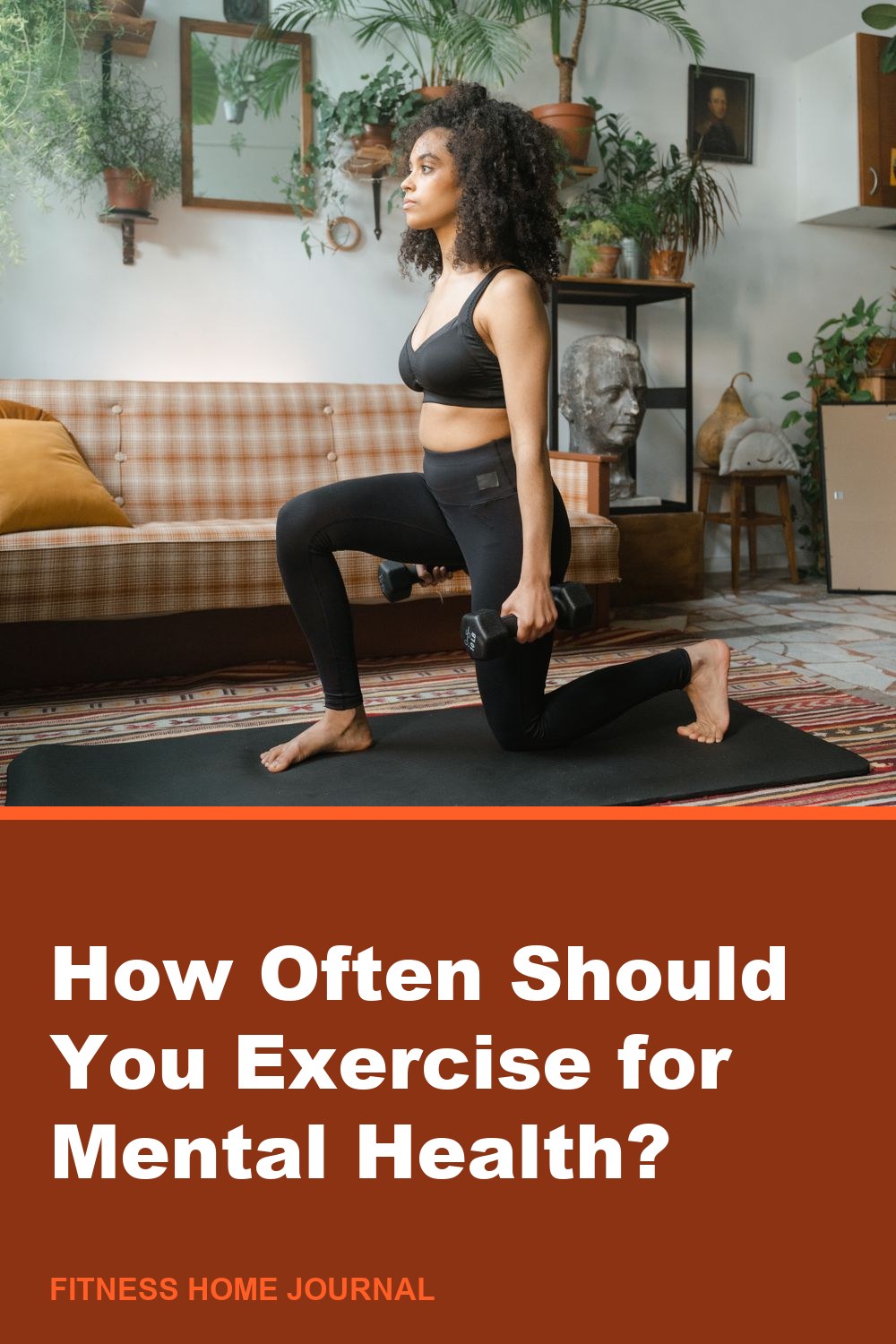

- In a study of 10,460 Norwegian students, how often people exercised predicted later anxiety and depression more reliably than intensity or session length.
- Risk of common mental disorders fell as weekly activity rose, up to about 10 hours, and the findings support the WHO target of 150 minutes a week.
- A mouse study suggests relentless hard training with little rest may keep brain chemistry elevated, so build rest days into a regular routine.
For mental health, aim to move often rather than heroically: a short, moderate session on most days of the week is a sound target, with at least one real rest day. That is the direction of a new study of more than 10,000 college students, which found that how frequently people exercised was a steadier signal for later mental health than how hard or how long they trained. A separate mouse study published days earlier adds a counterweight: hard training with too little recovery may keep the brain's chemistry stuck in an active state. Together they point to a routine that is regular, not extreme.
What the Norwegian student study did
The research was led by Michael Grasdalsmoen of Western Norway University of Applied Sciences and colleagues, and was published in PLOS One. According to ScienceDaily, the team followed 10,460 full-time students in higher education in Norway, aged 18 to 35.
At the start, students filled in questionnaires about their exercise: how often they trained, how strenuous it was, how long each session lasted and how many hours they were active in total each week. One year later, they completed a self-administered diagnostic assessment designed to pick up common mental health disorders such as depression and anxiety.
So the design looks forward in time. It asks whether the exercise habits people reported at the start lined up with their mental health twelve months later.
What the researchers found about frequency, intensity and hours
Students who reported lower overall physical activity were more likely to meet the criteria for anxiety or depression a year later. But the different pieces of exercise did not behave the same way.
- Frequency was the most consistent factor. How often students trained was more reliably linked to later mental health than intensity or time spent exercising.
- Women: lower exercise intensity was associated with a greater likelihood of anxiety and depression.
- Men: fewer total hours of exercise per week showed the stronger association.
- Total volume: the likelihood of common mental disorders decreased as weekly exercise increased, and this pattern continued up to roughly 10 hours of physical activity per week.
The authors also say the results support the World Health Organization's recommendation of at least 150 minutes of moderate-to-vigorous activity per week for adults. Ten hours is where the pattern was still visible in the data, not a target. Most busy adults will do well to start with the WHO figure.
How strong the evidence is, and what it cannot tell you
This is a large sample with a one-year follow-up, which is a real strength. Diagnostic tools, not just mood questionnaires, were used to judge mental health outcomes.
But the researchers themselves stress that the study is observational. It cannot establish cause and effect. Students who exercised regularly tended to have better outcomes, yet the results do not prove the exercise itself prevented depression or anxiety. People who feel well may simply find it easier to keep a routine, and other differences between students could play a part.
There are two more limits worth keeping in mind. The participants were students aged 18 to 35 in Norway, so the findings may not transfer neatly to a 45-year-old with a desk job and two kids. And the exercise data came from questionnaires, which rely on memory.
The authors' own conclusion is modest: students who exercise regularly were at lower risk of developing common mental disorders over time, and physical activity should be made an accessible and natural part of student life. That is a case for making exercise easy to repeat. It is not a prescription to train harder.
The mouse study: why "more" is not the goal
If frequency matters, should you train every day at full effort? The second study says be careful. Researchers in Brazil, publishing in the journal Neuroscience, studied mice under two conditions, as reported by ScienceDaily. One group ran a single treadmill session to exhaustion. The other followed an eight-week program built to mimic overtraining syndrome in elite athletes, ending with two sessions a day and only four hours of recovery between them.
After one exhausting session, dopamine in the hippocampus, a brain region involved in memory and emotional regulation, rose shortly afterwards. In the eight-week group, dopamine and the enzyme needed to make it stayed elevated 48 hours after the performance test, even though the animals were supposed to be recovering. Serotonin showed no significant differences.
First author Alisson Luiz da Rocha said the findings show that excessive exercise "affects not only skeletal muscle but also has a pronounced impact on the brain." The team suggests that dopamine staying high when the brain should be winding down could be one route to the insomnia, anxiety and persistent fatigue seen in overtrained athletes.
The caveats are large. These were mice. The researchers did not measure sleep, anxiety or alertness, and more work is needed to see whether the same changes happen in people. The protocol, two sessions a day with four hours between them, is far from anything a home exerciser does. Treat it as a reason to respect rest, not as proof that a hard workout will hurt your mood.
A week of regular, moderate training you can try
Neither study gives an exact number of days that works best, so what follows is coaching judgment built on their direction: show up often, keep most sessions moderate, and recover properly. Aim for about 150 minutes in total, for example five sessions of 30 minutes. If that sounds like too much, start with four sessions of 20 and build from there.
Session A, strength (25 minutes), twice this week. Do 3 rounds of: goblet squat or bodyweight squat for 10 reps, push-ups for 8 to 10 reps (hands on a counter if needed), one-arm dumbbell or band row for 10 reps each side, and a plank for 30 seconds. Rest 45 to 60 seconds between exercises. Stop each set with a couple of reps in reserve. If you want a ready-made structure, the Honest Toolkit's printable full-body workout checklist can serve as your template.
Session B, easy cardio (20 to 30 minutes), twice this week. A brisk walk, an easy bike ride or a run/walk mix, at a pace where you could still speak in short sentences. If you run, our minimum running plan shows how little is needed to keep a base.
One short top-up day. Ten minutes of mobility, a walk after dinner, or a few rounds of squats and push-ups. Our piece on exercise snacks explains how short bouts can still count.
One full rest day. Plan it, do not earn it. Put it after your hardest session, and protect your sleep around it.
If you prefer a no-gear base for Session A, the no-equipment home strength routine fits the format.
Signs to back off, and when to see a doctor
Overtraining syndrome, as described in the mouse study, involves declining performance, reduced appetite, ongoing fatigue, muscle pain and a greater risk of injury. If your sessions feel worse for a week or two, you sleep badly or you dread every workout, cut intensity or add a rest day before adding anything else. Keep the habit going at a smaller size, because consistency is the part the student study supports.
Exercise is not a treatment plan. If you have persistent low mood, anxiety or sleep problems, or an injury or health condition, talk to a doctor. Do that regardless of how well your training is going.
As an Amazon Associate I earn from qualifying purchases: if you buy through these links I may earn a small commission, at no extra cost to you. Each link opens a search on the Amazon store for your country.
Watch or listen to this episode
Sources
- ScienceDaily – Sports Medicine: For better mental health, how often you exercise may matter more than how hard
- ScienceDaily – Fitness: Too much exercise could leave your brain stuck in overdrive
Photo: MART PRODUCTION / Pexels

I'm an Italian creator who builds apps, games and websites. I run Fitness Home Journal with the help of AI tools: every article starts from the sources linked above, and I check what goes out. I'm not a doctor, a lawyer or a financial adviser. Spotted a mistake or have an idea? Write to me.
Instagram @spartaco_94_My websiteWrite to meAbout this blogWritten by Ciro Irmici (Ciro Simone Irmici), with the help of AI tools. Ciro Irmici's website











 Reinventing Yourself After 40: A Guide to Embracing Change and New Beginnings





