 Fitness Home Journal

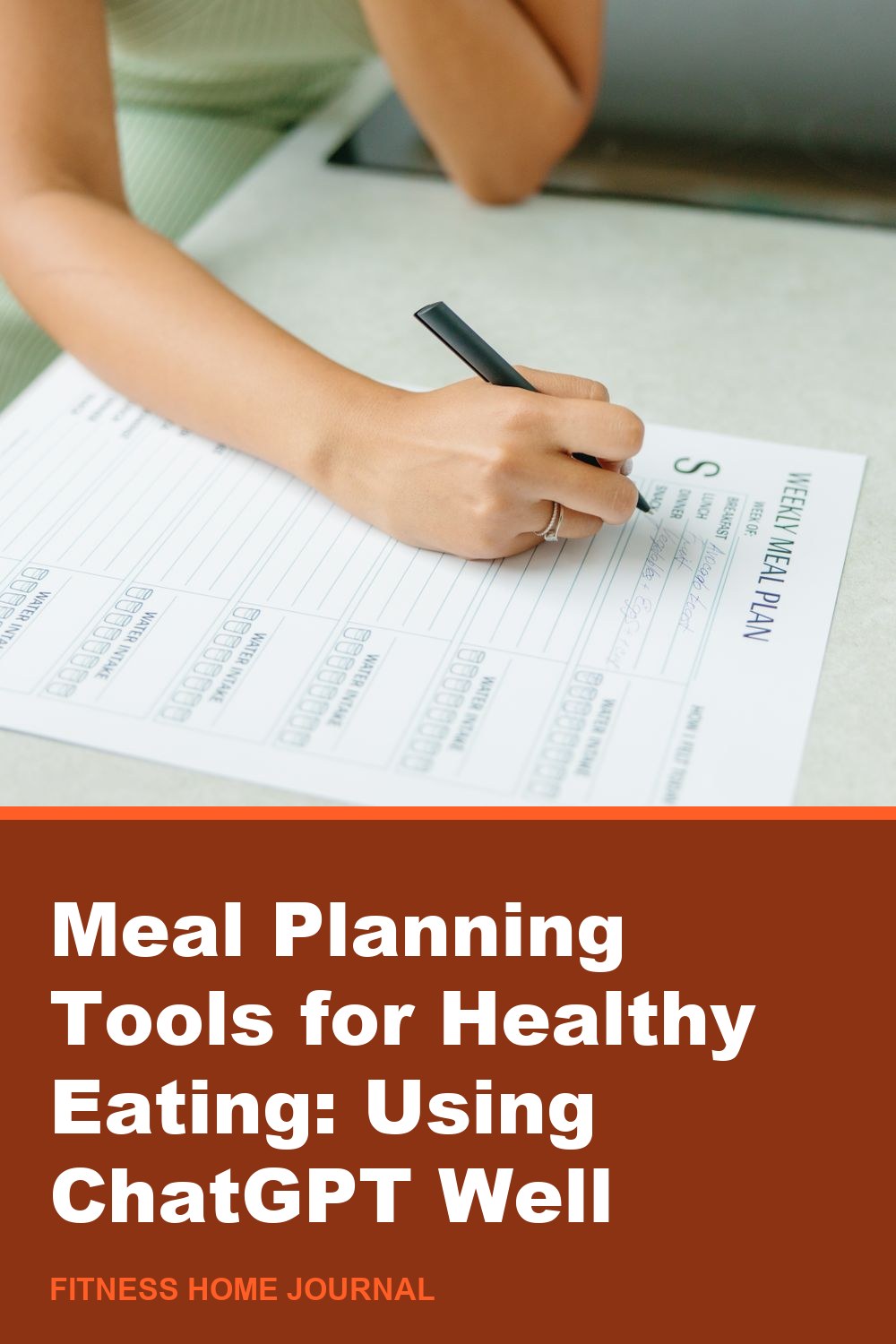

- Use a meal planning tool to build a short list of meals you will repeat, not a new recipe every night.
- One writer let ChatGPT plan meals for two weeks; that is a personal trial, so test the plan on your own routine.
- A chatbot cannot know your allergies, medical needs or taste unless you state them, and it does not replace a professional.
Meal planning tools like ChatGPT can support healthy eating when you use them to draft a small set of meals you can repeat, then check every suggestion against your allergies, medical needs and what you actually enjoy eating. That matters for anyone who trains at home on a tight schedule, because the food side of fitness is usually where the week falls apart. This rewrite of our earlier two-week review keeps what stays useful and turns it into a method you can try.
What the two-week ChatGPT test involved
The earlier Fitness Home Journal post was titled "Unexpected Meal Planning with ChatGPT: A Two-Week Review." Its author decided to let ChatGPT plan their meals for two weeks and went in with no idea what to expect. The writer described themselves as someone who often struggles with meal planning.
That is the whole setup: one person, one tool, two weeks. It is a practical experiment, not a clinical study. There was no comparison group and no lab testing. So treat it the way you would treat a training partner telling you about a program they tried: useful as a prompt to experiment, not proof of what will happen to you.
How much a two-week personal trial can tell you
A two-week trial is long enough to show whether a plan fits your schedule. You will quickly learn whether you cook the meals, whether the shopping list is realistic and whether you get bored. It is not long enough to tell you anything about your body, your long-term health or whether a particular way of eating is right for you.
It also cannot tell you how the tool will respond to your situation. Your budget, your kitchen, your household and your health history are different from the author's. The honest takeaway is narrow: a chatbot can produce a plan to react to. Whether that plan helps depends on what you tell it and what you do with it.
Food advice gets confusing fast once it is stripped of lifestyle, budget and health context. A tool that has none of that context will give generic answers. The more of it you supply, the more useful the draft becomes.
Why repeatable meals beat one perfect recipe
The most useful idea from the earlier post is simple: healthy eating is about patterns, not perfection. Meals that are easy to repeat usually matter more than one ideal recipe. A dinner you can make on a tired Wednesday after a strength session will do more for you than a beautiful recipe you cook once.
This is where a planning tool earns its place. Asking it for fourteen different dinners works against you, because novelty is what makes planning hard. Ask it instead to build a handful of meals from overlapping ingredients, so you shop once and cook variations. If you are also thinking about how much protein your training needs, our review of a 350-study protein review for lifters helps you set that target before you ask the tool to build meals around it.
If you want starting numbers to give the tool, the Honest Toolkit macro calculator is a free way to get them. Treat those figures as a starting point to adjust, not a prescription.
Where a chatbot meal planner stops
Quick food suggestions are inspiration. They are not a personal nutrition plan. Three limits matter most.
Allergies. A tool only knows what you type. If you have a food allergy, state it in every request and read every ingredient list yourself. Do not assume a suggested recipe is safe because it looks plain.
Medical needs. If you manage a condition, or you are making major changes to how you eat, plan with a doctor or a registered dietitian rather than a chatbot. Our post on type 2 diabetes remission and what the 54% study means shows how much context health-related food decisions need.
Preferences. A plan you dislike is a plan you will abandon. Tell the tool what you will not eat, how long you will spend cooking and what you can afford. Then cut anything that does not fit.
A one-week way to try a meal planning tool
You do not need a two-week commitment to learn something. Run one week and keep it small.
Sunday, 10 minutes. Write your request in plain language. Include your allergies, foods you dislike, how many people you cook for, how much time you have on weeknights, your budget and your training days. Ask for a small set of breakfasts, lunches and dinners that reuse ingredients, plus a shopping list.
Sunday, 5 more minutes. Read the draft like an editor. Cross out anything that clashes with an allergy, a medical instruction from your doctor or your own taste. Ask the tool to replace those items and say why they did not work. If a suggestion raises a health question, put it aside and ask a professional.
Monday to Saturday. Cook the plan as written, and repeat any meal you like without guilt. Repetition is the point. After each meal, jot down one word in your phone: keep, change or drop.
Next Sunday. Keep the "keep" meals and ask the tool to build around them. Over a few weeks you end up with your own short list, which is worth more than any single generated plan. If you want to see how that list fits around your training, our no-equipment home strength routine is an easy session to pair with your prep day.
What to look for when you review the results
Ask three plain questions at the end of the week. Did you actually cook most of the meals? Did the plan fit your budget and your schedule? Did anything cause a problem with your allergies, health or preferences? If the answer to the first two is no, simplify the plan rather than blaming yourself. If the third is yes, stop using that suggestion and get qualified advice.
Notice also whether the planning itself felt lighter. For someone who often struggles with meal planning, as the earlier review's author did, removing the blank page may be the main benefit.
FAQ
Can ChatGPT replace a dietitian?
No. It can help you draft meals and a shopping list, but it does not know your medical history and can be wrong. For allergies, medical conditions or major changes to how you eat, use a qualified professional.
How long should I test a meal plan before judging it?
The earlier review ran for two weeks, which is enough to see whether a plan fits your routine. One week is a fair first test. Keep what you repeat easily and drop what you do not.
This article is general information and does not replace guidance from a qualified health, nutrition or fitness professional.
As an Amazon Associate I earn from qualifying purchases: if you buy through these links I may earn a small commission, at no extra cost to you. Each link opens a search on the Amazon store for your country.
Photo: Yaroslav Shuraev / Pexels

I'm an Italian creator who builds apps, games and websites. I run Fitness Home Journal with the help of AI tools: every article starts from the sources linked above, and I check what goes out. I'm not a doctor, a lawyer or a financial adviser. Spotted a mistake or have an idea? Write to me.
Instagram @spartaco_94_My websiteWrite to meAbout this blog










 Reinventing Yourself After 40: A Guide to Embracing Change and New Beginnings





