 Fitness Home Journal

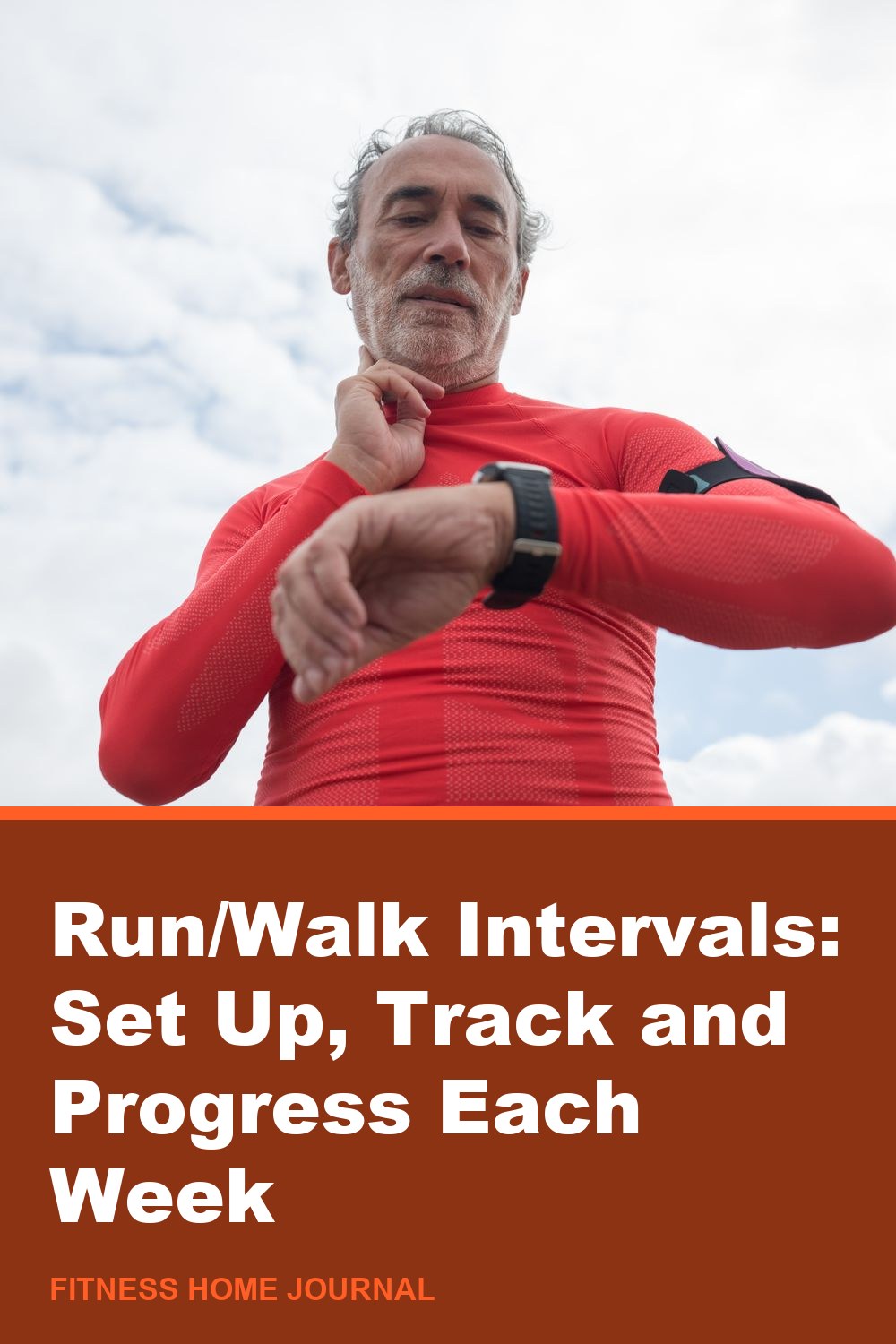

Short, planned walk breaks can help you run faster, recover better and build fitness without piling on extra hard effort. According to Runner's World, the run/walk method works for beginners and veterans alike. For busy adults squeezing training into small gaps, it is a way to run consistently without feeling flattened afterwards. This guide turns the method into a weekly routine: how to choose your intervals, how to track them, and how to progress.
Why walk breaks are worth a place in your week
Runner's World traces the method to Jeff Galloway, a member of the 1972 U.S. Olympic team in the 10,000 meters. In the 1970s he coached beginners toward a 5K and 10K and found that walk breaks helped them finish their miles feeling strong. His athletes followed a "huff and puff" rule: when your breathing starts to strain, take a short walk. After a 10-week block they all reached their finish lines injury-free.
There is research behind it too. Runner's World describes one study of recreational marathon runners in which those who used run/walk reported significantly less muscle pain and fatigue afterwards. Fewer than 5 percent of the run/walkers reported extreme exhaustion, against more than 40 percent of the continuous runners.
A 2024 Australian study had participants follow a 12-week run/walk program of three 30-minute sessions a week. Those who reported chronic lower back pain saw significantly reduced pain and disability. If you have back pain or any other condition, check with a doctor before starting a new program.
Runner's World also lists the wider benefits: less fatigue, lower injury risk, better recovery during and between runs, easier heart rate control, and a way to break any distance into manageable chunks.
Step 1: Choose your run and walk lengths
Start with time-based intervals rather than distance, especially if you are new to running or to this method. You split the session into set numbers of seconds or minutes, which is easy to follow when you are tired or distracted.
The walk stays the same: 30 seconds. Runner's World calls it a length that gives your heart and legs recovery without hurting your pace much, whatever your speed. What changes is the run segment. As you get faster, your run-to-walk ratio grows and you spend more time running.
Runner's World gives these guidelines, which you should treat as starting points rather than rules:
| Predicted pace | Run interval | Walk interval |
|---|---|---|
| 11-minute mile | 60 seconds | 30 seconds |
| 10-minute mile | 90 seconds | 30 seconds |
| 9-minute mile | 2 minutes | 30 seconds |
| 8-minute mile | 4 minutes | 30 seconds |
| 7-minute mile | 6 minutes | 30 seconds |
Slower paces follow the same logic. Runner's World's examples include a 12-minute mile with a 60-second run and a 30-second walk, and an 18-minute mile with a 5-second run and a 30-second walk. You can also adjust the lengths if the suggested split feels wrong for you.
Step 2: Find your pace with the Magic Mile
If you don't know your pace, the Magic Mile test removes the guesswork. Runner's World describes it like this:
- Find a track or a flat one-mile route.
- Warm up with 10 minutes of running, four 100-meter strides and three minutes of walking.
- Run one mile at a consistent, natural effort, with walk breaks if you need them.
- Record your time. That is your Magic Mile.
Then use Galloway's formulas to estimate training and race paces:
- 5K: Magic Mile + 33 seconds
- 10K: Magic Mile x 1.15
- 10 miles: Magic Mile x 1.175
- Half marathon: Magic Mile x 1.2
- Marathon: Magic Mile x 1.3
As an example, a 10-minute Magic Mile gives a 5K pace of 10:33 per mile, a 10K pace of 11:30, a half marathon pace of 12:00 and a marathon pace of 13:00. For long runs, Runner's World says to aim for roughly 90 seconds to two minutes slower than your 5K pace.
Treat the number as a guide only. Chris Twiggs, chief training officer at Galloway Training, says the Magic Mile gives you an idea of a goal, and that plenty of runners he has coached have run faster on race day than it predicted.
Step 3: Track every session
Runner's World recommends an interval timer over relying on a smartwatch, because it is the most accurate way to hold your ratios. Set your run and walk times before you leave, clip the timer to your jacket or waistband, and let it buzz when it is time to switch. Then you don't have to think about the clock.
If you log runs on a watch or in an app like Strava, don't pause during the walks. Letting the clock run gives a truer picture of your effort and makes progress easier to read over time.
After each session, write down three things: total distance, your run/walk ratio, and how you felt. The numbers show objective progress and your notes show subjective progress. A paper notebook works as well as an app.
What this means for you: a simple weekly routine
Runner's World does not prescribe a fixed weekly schedule, so this is one way to combine its advice with the three-sessions-a-week pattern from the Australian study. Adjust it around your own diary.
- Session 1, easy run/walk: Use the ratio from the table for your current pace. Keep the walks brisk and the runs comfortable. Walking at an easy pace should not be your aim: Twiggs's advice is to walk as if you have somewhere to be, without slipping into race-walking technique.
- Session 2, tempo run: Once a week, run at marathon pace and try different run/walk ratios to find the split that feels most comfortable.
- Session 3, longer run: Use the slower long-run pace described above, keep the 30-second walks, and log how you felt at the end.
- Every one to three weeks: Repeat the Magic Mile, starting slower than last time and finishing strong. Update your paces and ratios from the result.
Each session needs only a timer, a notebook and a pair of comfortable shoes. Runner's World says to look for cushioning, support and durability, and if you are just starting out, extra stability helps, according to Carissa Galloway, RDN and certified personal trainer.
How to progress without overthinking it
Keep the walk at 30 seconds and lengthen the run segment as your pace improves. For example, Runner's World notes that a runner might run two minutes and walk 30 seconds for a 9-minute mile, then run four minutes to aim at an 8-minute mile. Another benefit is that as you get faster at walking, you take some pressure off the running portions.
Retest with the Magic Mile once you feel you can go farther and stay strong at your current paces. If a retest comes out slower, don't panic. Runner's World suggests looking at things like poor sleep and stress. A slower result could also mean you need more interval sessions, rest or cross-training. If you have pain that doesn't settle, see a doctor.
FAQ
Is run/walk only for beginners?
No. Runner's World calls that a myth. The method suits new runners and experienced racers alike, and the publication says advanced runners can use it to improve efficiency, speed and distance. Carissa Galloway says a runner averaging a nine-minute mile can finish a marathon in under four hours with or without walk breaks.
How long should my walk breaks be?
Thirty seconds is the length Runner's World recommends for most paces, as most advanced run/walkers use it. Keep the walk brisk enough to feel purposeful, but easy enough that your heart rate drops and your legs recover.
Should I pause my watch when I walk?
No. Runner's World advises keeping the clock running for the whole session, which better reflects your effort and makes your progress easier to follow.
- A clip-on interval timer to buzz when it's time to run or walk
- Cushioned, supportive running shoes for run/walk sessions
As an Amazon Associate I earn from qualifying purchases. Links open a search on the Amazon store for your country.
Sources
- Runner's World – Training: How to Master the Run/Walk Method: Tracking Your Intervals
- Runner's World – Training: How to Master the Run/Walk Method: Improve Your Pace and Recovery
- Runner's World – Training: How to Master the Run/Walk Method: Using the Magic Mile
Photo: Kampus Production / Pexels

I'm an Italian creator who builds apps, games and websites. I run Fitness Home Journal with the help of AI tools: every article starts from the sources linked above, and I check what goes out. I'm not a doctor, a lawyer or a financial adviser. Spotted a mistake or have an idea? Write to me.
Instagram @spartaco_94_My websiteWrite to meAbout this blog










 Reinventing Yourself After 40: A Guide to Embracing Change and New Beginnings





