 Fitness Home Journal

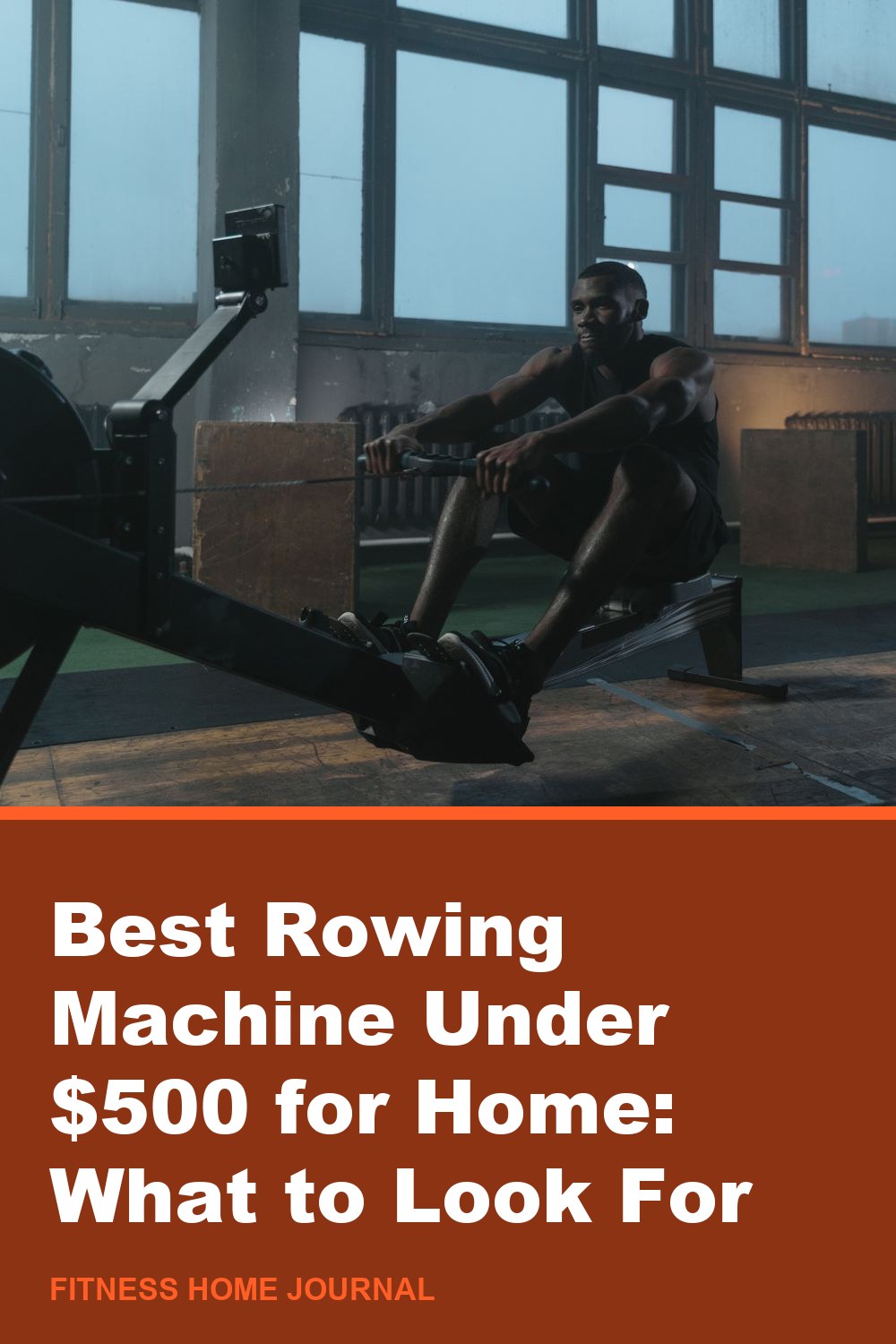

- Under $500, the best rower is the one that fits your height, your floor space and your noise limits, not the one with the longest feature list.
- Check rail length, the seat's roll and footplate fit first: a machine that feels cramped or wobbly will end up as a clothes rack.
- Spend on a stable frame and smooth seat, not on screens or subscriptions, and start with three easy 15 to 20 minute sessions a week.
The best rowing machine under $500 for home is the one that fits your body, your floor space and your noise tolerance, and that feels solid when you pull hard. Rank those four things (fit, space, resistance type, build quality) above the screen or the feature list, and you will make a good choice in most price brackets. A rower is a practical way to get steady cardio indoors, but only if you will actually sit on it three times a week. This guide gives you the criteria, what to skip paying for, and a simple setup and starting plan.
One honest note first: no single model suits everyone, and the right pick depends on your height, goals, injury history and the corner of the home where it will live. Use the checklist below to narrow the field, then judge individual machines against it.
Fit: will the machine suit your body?
Fit is the most overlooked factor under $500, because budget machines cut corners on size and adjustability first. If you are tall, a short rail means your legs run out of room at the finish and you cannot extend fully. If you are shorter, check that you can reach the handle comfortably at the start of the stroke without overreaching.
- Rail length: sit down on the machine if you can, or compare the listed rail length to your leg length. Your legs should straighten without the seat hitting the end stop.
- Footplates: they should adjust, and the straps should hold your foot without crushing it. Heels should lift naturally.
- Seat height and comfort: a seat that is very low is hard to get out of; a very hard one gets uncomfortable fast. A slim cushion or padded shorts can fix comfort, but not a bad seat height.
- User weight limit: read the manufacturer's stated maximum and stay comfortably under it.
- Handle: it should feel comfortable in your hands for ten minutes, with no sharp seams.
If you have back, knee or hip problems, or you are returning after an injury, talk to a doctor or physical therapist before starting. Rowing loads the legs and back together, and form matters.
Resistance type: air, magnetic, piston or water
Resistance type changes how the machine feels, how loud it is and how much space it takes. This is the main trade-off among budget rowers.
| Resistance type | How it generally feels | Good for | Watch out for |
|---|---|---|---|
| Air (flywheel) | Resistance rises as you pull harder | Anyone who wants a smooth, responsive stroke and room to progress | Noise; usually a longer footprint |
| Magnetic | Smooth, with set resistance levels | Shared homes, apartments, early-morning sessions | Check that the lowest and highest levels suit you |
| Hydraulic piston | Short, sometimes choppy stroke | Tight spaces and very small budgets | Rails and arms can limit tall users; less natural stroke |
| Water | Natural, swishing feel | People who value feel and a quieter, more natural motion | May stretch a $500 budget; confirm the price and size before you commit |
If you live with other people or neighbours below you, magnetic is usually the safest bet for noise. If you want one machine to grow with you as you get fitter, favour a design where the effort scales with how hard you pull, rather than one with a small set of fixed levels.
Space: measure before you buy
A rower is long. Measure the floor space for the machine in use, not just in storage, and leave room to sit up and swing your arms.
- Length in use: allow a little extra at each end so you are not stopping short of the full stroke.
- Storage: look for a design that folds or stands upright, and that has wheels so you can move it without lifting.
- Floor: a mat helps protect floors and cut vibration and noise.
- Ceiling and doorways: if it stores upright, check the height against your ceiling and the route to its storage spot.
A rower you must carry up stairs to use will rarely get used. Pick the spot first, then the machine.
Build quality: what to check before you trust it
At this price, small differences in build matter a lot. Read owner reviews with a specific eye for the following.
- Wobble: the frame should not rock or flex when you pull hard.
- Seat roll: it should glide quietly, with no grinding or sticking along the rail.
- Handle and chain, strap or cord: look for complaints about wear, slipping or snapping.
- Hardware: bolts that loosen after a few sessions are a common complaint with budget gear, so check reviews for it.
- Warranty and support: read the terms and look at how easy it is to get spare parts.
What not to pay for at this budget
Every dollar spent on extras is a dollar not spent on frame and seat quality. Skip, or treat as bonuses:
- Large touchscreens and built-in classes: you can follow a workout from a timer or a video on a phone.
- Subscriptions: check whether the screen is useless without a paid plan.
- Long lists of preset programs: you need time, distance and stroke rate, not 20 programs.
- Heart-rate gadgets that do not work well: a basic watch or chest strap you already own may be better.
A basic monitor that shows time, distance, stroke rate and pace per stroke is enough for nearly every home rower.
A good-enough setup by budget
If you want to spend less than the full $500: choose the machine with the best fit and frame you can find, add a mat, and use your phone as the timer. Do not add anything else until you have trained consistently for a month.
If you use the full $500: put the money into stability, a smooth seat and a resistance type that suits your home (magnetic if noise matters, air if you want room to progress). Add a mat and a basic timer.
If space is the main limit: prioritise a model that folds or stands upright, and accept a simpler monitor. Measure the storage spot before ordering, and check the return policy.
Your first four weeks on a budget rower
Technique first, intensity later. The stroke is legs, then body, then arms on the way back, and the reverse on the way forward. Keep your back straight and avoid yanking with your arms.
- Week 1: three sessions. Row easily for 5 minutes, then 3 rounds of 2 minutes steady and 1 minute easy, then 3 minutes easy. Focus only on smooth strokes.
- Week 2: three sessions. Same structure, but make the steady rounds 3 minutes each.
- Week 3: three sessions. Try 4 rounds of 3 minutes steady and 1 minute easy, between a 5-minute warm-up and a 3-minute cool-down.
- Week 4: keep two sessions the same, and make one longer, continuous row of 15 to 20 minutes at a pace where you could still say a short sentence.
Rowing does not replace strength training, and nothing here shows it can. Pair it with two or three lifting sessions; the Honest Toolkit three-workouts-a-week guide can help you fit them into a busy schedule. For building a balanced week around your cardio, see our home workout plan. If you are still weighing machines, our post on exercise bikes for at-home cardio covers another low-impact option, and our guide to choosing versatile home gear helps with the wider setup.
Pre-purchase checklist
- Rail length suits my legs, and the footplates adjust.
- The stated user weight limit is comfortably above my weight.
- I measured the floor space in use and the storage spot.
- The resistance type matches my noise limits and goals.
- Reviews mention no wobble, grinding seat or loose bolts.
- The monitor works without a subscription.
- I have read the warranty and return policy.
FAQ
Is a rowing machine enough as my only home workout?
It can be your main cardio, but it does not replace resistance training. Add two or three strength sessions a week for the best balance.
Should I see a doctor before starting?
If you have back, knee, hip or heart concerns, or you are returning from injury, get medical advice before you start. Stop if you feel sharp pain.
As an Amazon Associate I earn from qualifying purchases: if you buy through these links I may earn a small commission, at no extra cost to you. Each link opens a search on the Amazon store for your country.
Photo: Tima Miroshnichenko / Pexels

I'm an Italian creator who builds apps, games and websites. I run Fitness Home Journal with the help of AI tools: every article starts from the sources linked above, and I check what goes out. I'm not a doctor, a lawyer or a financial adviser. Spotted a mistake or have an idea? Write to me.
Instagram @spartaco_94_My websiteWrite to meAbout this blog










 Reinventing Yourself After 40: A Guide to Embracing Change and New Beginnings





