 Fitness Home Journal

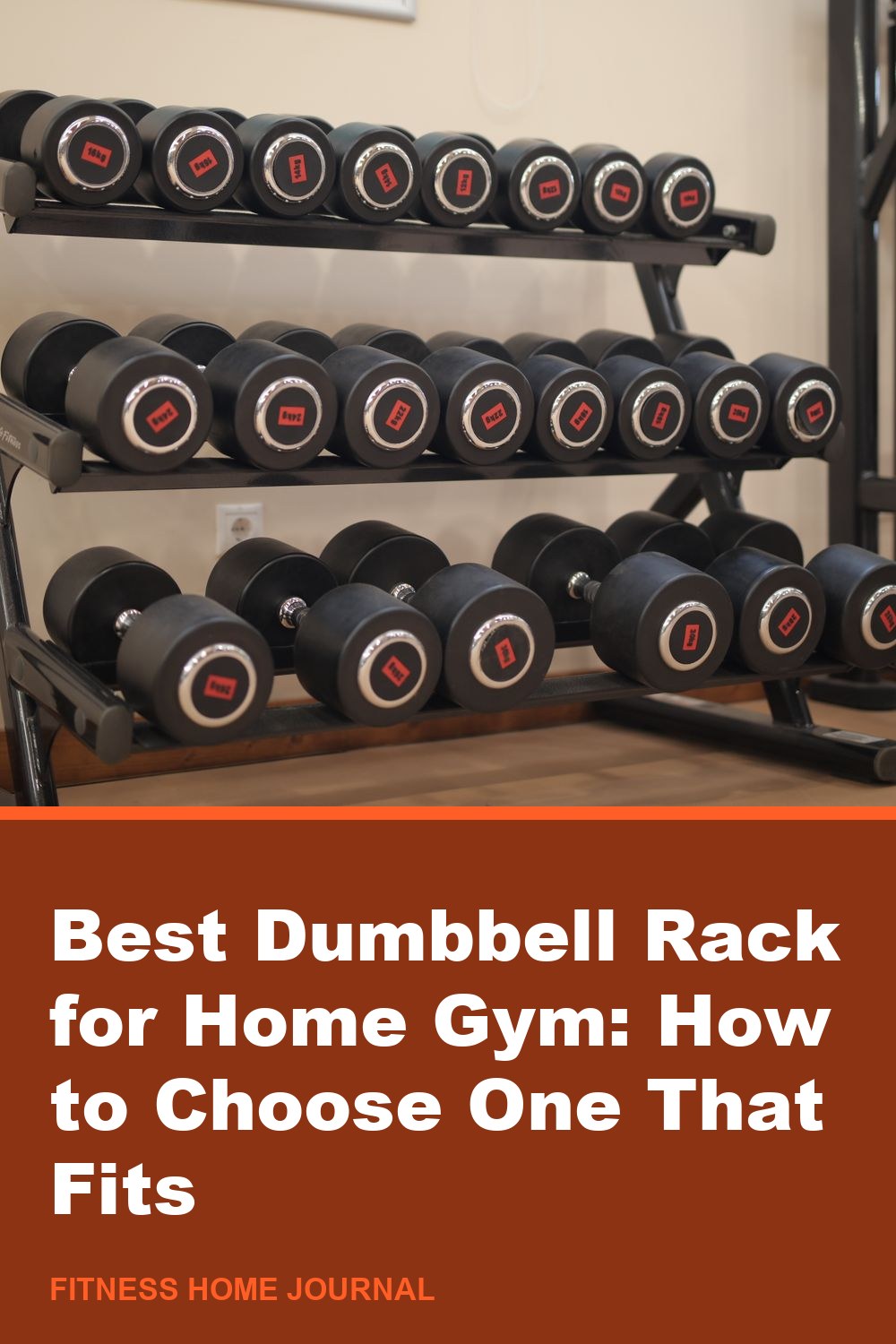

- The best dumbbell rack is the one that fits your room, your weights, your budget and your routine, not the one with the loudest recommendation.
- Check space, weight range, durability and setup effort in that order, and read the return policy before you pay.
- A rack earns its place only if it removes friction from a habit you already have, so skip features you will never use.
The best dumbbell rack for a home gym is the one that fits the room you have, holds the weights you actually lift, is built to last, and doesn't take a weekend to put together. Our earlier version of this post rounded up eight racks recommended by fitness editors and personal trainers, and it made the case that a quality rack is a must if you are serious about your home setup. That still holds. But no ranked list knows your floor space or your budget, so this version gives you the method for choosing instead of one trendy pick.
What to look for in a dumbbell rack
Price, fit, durability, setup and return policies can matter as much as how appealing a product looks. Use these as your criteria, and judge each one against your own routine:
- Space: Does it fit the spot where you train, with room to lift a dumbbell off it and step back?
- Weight range: Does it hold the pairs you use now, plus the next pair or two you expect to add?
- Durability: Does it feel solid when loaded, with no wobble or flex?
- Setup needs: Can you assemble it yourself, and does it need tools or a second person?
- Price against use: Will you use it several times a week?
- Return policy: If it doesn't fit or arrives wobbly, can you send it back easily?
Behind all of these sits one question: does this rack make it easier to start your workout? A tidy rack that puts the right dumbbells in reach removes friction. A rack that looks impressive but sits half-empty doesn't.
Measure your space before you browse
Most buying mistakes start with browsing before measuring. Grab a tape measure and check three things: the floor footprint, the ceiling or wall clearance if you plan to stack weights high, and the walking space in front of the rack.
Then think about how you move. If you train in a spare room, a corner or a garage, the rack has to share space with your lifting area. Leave enough room that you can pick up a pair, turn and set up without brushing the wall. If you have to shuffle furniture before every session, you will skip sessions.
The same thinking applies to your wider setup. If you are still deciding what else the room needs, our guide to choosing versatile fitness home gear covers how to keep gear flexible.
Match the rack to the weights you actually lift
Write down every pair of dumbbells you used in the last few weeks. That list is your weight range. If your session is a leg day with one heavy pair and a shoulder day with two lighter pairs, you need a rack that holds three pairs, not twelve.
If you are unsure how heavy your top pair should be, an estimate of your strength helps. The Honest Toolkit one-rep-max calculator can give you a rough ceiling for a lift, so you can plan which heavier pair to add next and make sure the rack can take it.
Leave a little room to grow, but don't buy for a version of yourself that doesn't exist yet. Strength builds over months, and a rack you outgrow slowly is better than one you pay extra for and never fill. If your plan is a single pair or one adjustable set, our post on what you can do with one set of dumbbells shows how far that goes before you need storage for more.
What not to pay for
Gear posts can slide into hype, and racks are no exception. Be cautious about these:
- Capacity you won't use. A rack for a dozen pairs is wasted money if you own three.
- Trend appeal. A popular design is only a good choice if it also fits your room and your weights.
- Looks over build. A rack that looks sleek but flexes under load is a poor trade.
- Complicated assembly. If setup is a project you will keep putting off, the rack is a cost, not a help.
- A purchase with no return option. A fit problem you can't fix is the most expensive kind.
Also be honest about the limits of any recommendation, including the earlier one on this blog. Editors and trainers can tell you what worked for them. They can't tell you whether it works in your hallway.
A good-enough setup by budget
You don't need to spend big to get a sound setup. Think in tiers and move up only when your training asks for it.
- Tight budget: Start with one or two pairs of dumbbells and a simple place to keep them off the walkway, such as a corner of the room. Spend on weights first. A rack matters once you have enough dumbbells to get in your way.
- Middle budget: Add a compact rack that holds the pairs you already own plus one or two more. Pick it for fit and sturdiness rather than extra capacity, and check the return policy.
- Larger budget: Choose a rack with room for a full progression of pairs, with the strongest build you can afford. Make sure the space really supports it before you order.
A mat under the rack and your lifting area is a sensible add-on in any tier, since it protects the floor and keeps the setup stable.
Five steps to choose in one evening
- Measure the floor footprint and the clearance where the rack will stand.
- List every dumbbell pair you used in recent weeks, then add the next pair you plan to buy.
- Shortlist two or three racks that hold that list without extra capacity you won't use.
- Compare them on build, setup effort and return policy, not looks.
- Order the one that makes your next workout easier to start, and set it up the day it arrives. Then do a normal session and see whether it helps you move smoothly or gets in your way.
If something feels unstable or you are lifting around an injury or a health condition, speak to a doctor or a qualified trainer before you add load.
Once the rack is in, build the routine around it
A rack is only useful if the training happens. Pick the days you will lift and keep the dumbbells you need for each session at the front. If you are building a plan from scratch, our home workout plan is a good place to start.
FAQ
Do I need a rack if I only own one pair of dumbbells?
Probably not. The test is whether the rack removes friction from a habit you already have. With one pair, a clear spot on the floor does the same job. A rack starts to make sense when several pairs begin to crowd the room.
Should I trust a rack just because editors and trainers recommend it?
Use recommendations as a shortlist, not a verdict. Check any pick against your own space, weight range, budget and setup needs, and keep the return policy in mind in case it doesn't work in your room.
As an Amazon Associate I earn from qualifying purchases: if you buy through these links I may earn a small commission, at no extra cost to you. Each link opens a search on the Amazon store for your country.
Photo: Andrea Piacquadio / Pexels

I'm an Italian creator who builds apps, games and websites. I run Fitness Home Journal with the help of AI tools: every article starts from the sources linked above, and I check what goes out. I'm not a doctor, a lawyer or a financial adviser. Spotted a mistake or have an idea? Write to me.
Instagram @spartaco_94_My websiteWrite to meAbout this blog










 Reinventing Yourself After 40: A Guide to Embracing Change and New Beginnings





